Past Presidents
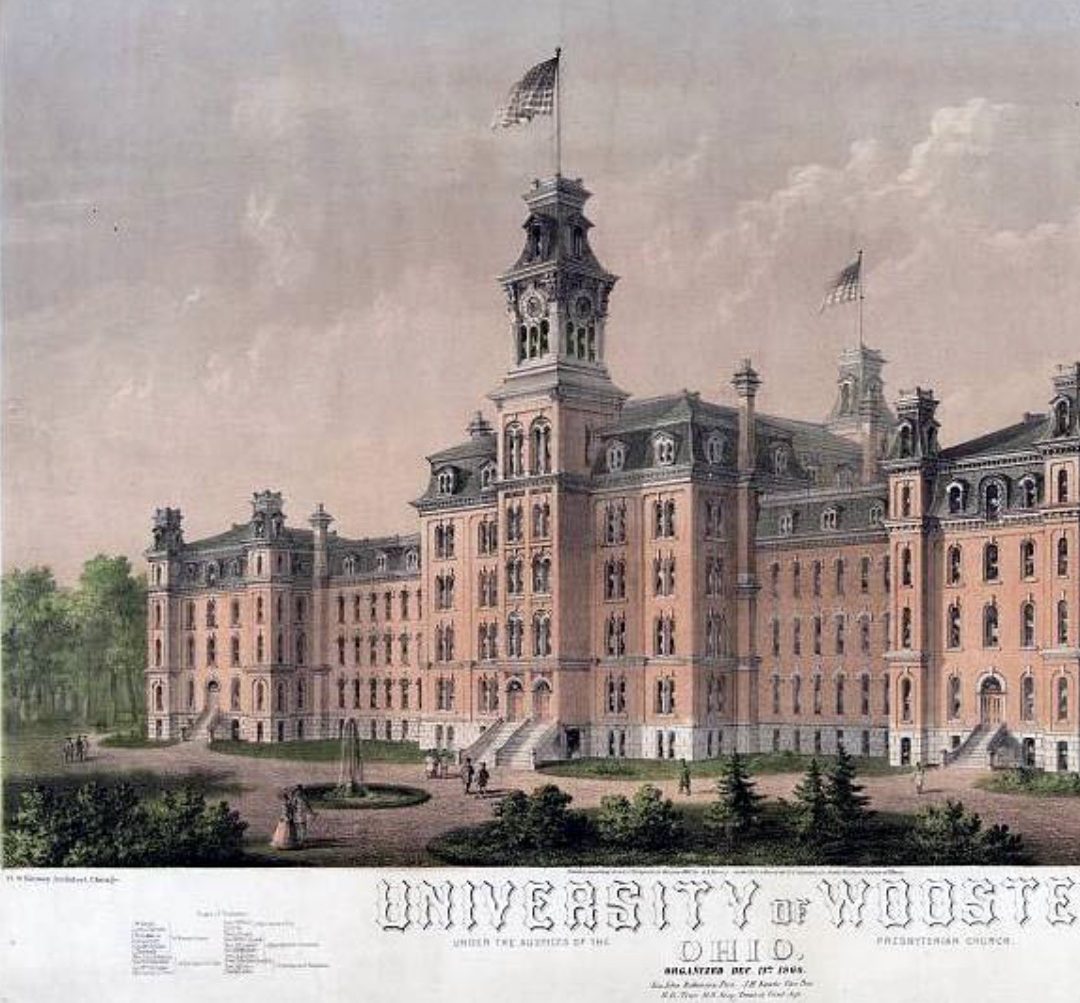
From the founding of the University of Wooster in 1866 to The College of Wooster today, those who have led the institution have helped shape its character, traditions, intellectual life, and enduring liberal arts mission.
1870 — Present · A Presidential History
The history of The College of Wooster is a history of people who firmly believed in the transformative power of education. Over a century and a half, Wooster’s leaders have guided the College through periods of extraordinary growth, war, social change, financial challenge, and renewal. Their service has left an enduring mark on the campus, its students, and the liberal arts tradition.
13
Numbered Presidents
153+
Years of Institutional History
1870–Present
Historical Record
Presidents of The College of Wooster
Learn about the individuals who have guided Wooster through its institutional history.
Founding & Early Growth
01
First President
Rev. Willis Lord, D.D.
1870–1873
Read Presidential History
+
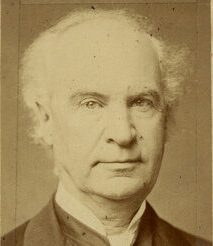
Rev. Willis Lord, a professor of didactic theology at the Theological Seminary of the Northwest in Chicago, accepted the Board of Trustees’ offer to become The University of Wooster’s first president March 14, 1870. Lord worked collaboratively with the trustees to develop a wide-ranging curriculum and constitute a faculty. Ahead of his time, Lord was a vociferous advocate for diversity, equity, and inclusion, arguing that an excellent education demands a diversity of voices and perspectives and that people studying together, on equal terms, makes learning better—for everyone. During his inauguration, Lord proclaimed that Wooster “should be not only a place of all studies; it should also be a place of studies for all … The essential test of citizenship in the commonwealth of science and letters should be character, mental and moral quality, and attainment, not condition, race, color, or sex.” During Lord’s time as president he developed close ties with the community, recruited and graduated three classes, introduced scholarly standards, and helped to create a lasting place for Wooster among the colleges of Ohio.
02
Second President
Archibald Alexander Edward Taylor, D.D., LL.D.
1873–1883
Read Presidential History
+
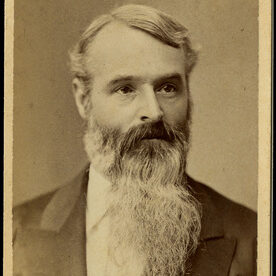
Rev. Archibald Taylor was inaugurated as Wooster’s second president October 7, 1873, the beginning of a period described by one historian as a “golden age, an era of expansion and of gifted personalities.” A Presbyterian minister from Cincinnati, he eagerly established the Westminster Presbyterian Church and expanded biblical course offerings to fulfill students’ interest in ministry as a vocation. The campus also grew to include an observatory and Severance Gymnasium, and under Taylor’s leadership, the departments of music and graduate study were added, enrollment increased throughout all departments, the first female faculty member was hired, and organized athletics as well as social clubs began to take shape. Two years after resigning from the presidency, Taylor returned to Wooster to serve as a professor of logic and political science, the director of the post-graduate department, and editor of The Post-Graduate and Wooster Quarterly (now Wooster magazine).
03
Third President
Sylvester Fithian Scovel, D.D., LL.D.
1883–1899
Read Presidential History
+
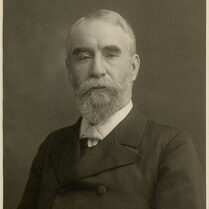
Rev. Sylvester Fithian Scovel, D.D., LL.D., a Presbyterian minister from Pittsburgh, became Wooster’s third president in October of 1883. Scovel gave to Wooster a rare personality, vigorous, cultivated, reserved, sincere, and deeply spiritual. During his tenure, the first African American student graduated from Wooster in 1892, additions were made to Old Main, and construction began on the library. Attendance continued to grow during his tenure as did the number of faculty through endowed gifts that especially strengthened the scientific departments. The first issue of The Wooster Voice appeared on November 13, 1883. Hoover Cottage was constructed for women to be a real home, not an institutional dormitory. Captain J.H. Kauke gave a deed for his own residence on Beall Avenue to the College in 1889, and it was remodeled for the conservatory of music with the upper floors providing dormitory space for young women who came to Wooster to study music.
Rebuilding & Expansion
04
Fourth President
Louis Edward Holden, D.D., LL.D.
1899–1915
Read Presidential History
+
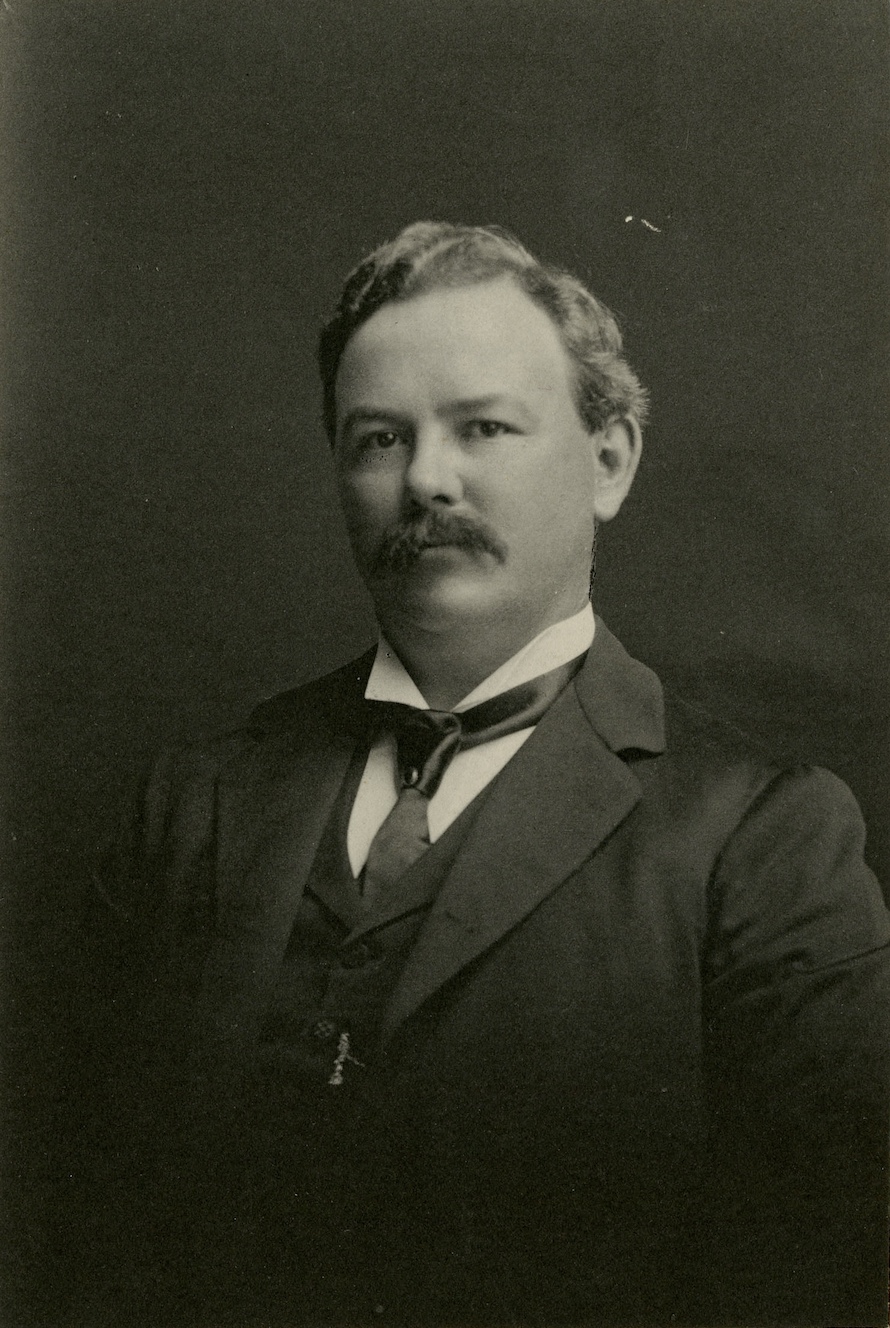
Similar to previous presidents, Rev. Louis Holden, inaugurated November 3, 1899, was a Presbyterian minister, but unlike his predecessors he was also a businessman who recognized that the “time had passed” for Wooster to be “chiefly a preparatory school for theological seminaries.” That acumen proved to be critical when the “Great Fire” burned down Old Main, leaving the College in shambles in December 1901. Holden aggressively and quickly raised funds to build four new buildings: Kauke Hall, Severance Hall for chemistry, Scovel Hall for biology, and Taylor Hall. Dubbed the “New Wooster” by some, the campus flourished in nearly every area during Holden’s tenure, growing to 100 acres and the endowment reaching $1 million for the first time. Holden is also credited with lifting the ban on intercollegiate athletics early in his administration, and he oversaw the name change from university to college to better reflect the institution’s offerings.
05
Portrait
Fifth President
John Campbell White, LL.D.
1915–1919
Read Presidential History
+
Rev. John Campbell White, an 1890 alumnus, took over as president of The College of Wooster in 1915, succeeding President Holden who served in the role for 16 years. Like his predecessors, White was an ordained minister, but unlike them, he came with no academic experience, but with a missionary zeal for making a difference in the larger world. He was a College trustee and a member of the search committee for the position he filled. White introduced the Wooster Symphony Orchestra in 1916, which is today one of the oldest town and gown orchestras in the country. As the U.S. entered World War I in 1917, military training for men was substituted for required physical education classes. Fall admissions fell by 28 percent. Coal shortages resulted in an extended Christmas vacation. In 1919, White resigned for an administrative position with the Interchurch World Movement of North America.
06
Sixth President
Charles Frederick Wishart, D.D., LL.D., Litt.D., L.H.D.
1919–1944
Read Presidential History
+
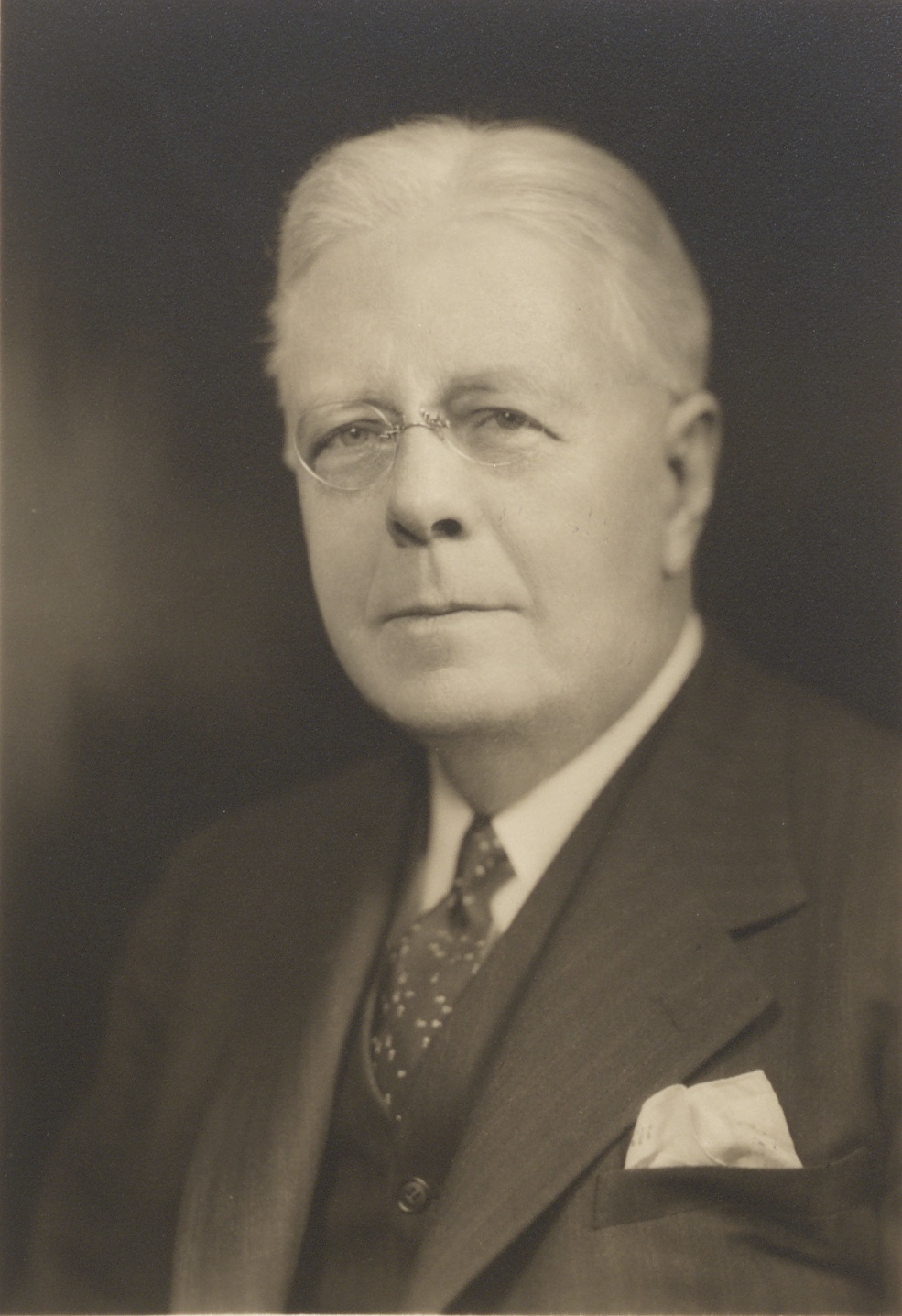
Rev. Charles “Prexy” Wishart was inaugurated December 9, 1919, the start of what would become the longest tenure in The College of Wooster’s presidential history. Early in his presidency, he was elected moderator of the General Assembly of the Presbyterian Church USA, beating out well-known politician William Jennings Bryan in a bitter election over whether affiliated schools should teach the theory of evolution. During his 25 years at the College, Wishart’s “luminous spirit” helped guide the way through troubling times of the Great Depression and into World War II, and his accomplishments were impressive and wide-ranging. A number of student residences were constructed, including Babcock Hall and Douglass Hall, as were Galpin Hall and Hygeia Hall, and faculty increased by one-third to meet the demands of a growing student population. New degrees in music were conferred, academic programs expanded greatly, the Phi Beta Kappa chapter was formalized, a 24/7 student health service was instituted, the marching band wore kilts for the first time, and an alumni secretary and a news bureau also were established.
Transformation & Modernization
07
Seventh President
Howard F. Lowry, Ph.D., Litt.D., LL.D., D.C.L., L.H.D.
1944–1967
Read Presidential History
+
Howard F. Lowry, a 1923 alumnus of The College of Wooster, was a scholar of English literature and a longtime member of the Wooster academic community. Before becoming president, he taught English at Wooster and later served as a professor of English literature at Princeton University. In 1944, he returned to Wooster as its seventh president, beginning a 23-year tenure that transformed the College academically and physically. Under Lowry’s leadership, the College constructed 15 new buildings, including Andrews Library, which opened in 1962, and renovated five others. One of his most enduring contributions was the creation of Independent Study in 1945; by 1949, the program had become a required part of the curriculum for graduating students. Lowry described Independent Study as one of the College’s highest academic invitations, giving students the opportunity to pursue sustained, independent inquiry. His presidency also saw the hiring of Wooster’s first African American faculty member and a female medical director, the expansion of opportunities for women in athletics, and the creation of a campus chapter of the NAACP. Through his scholarship, leadership, and commitment to student research, Lowry helped establish Independent Study as a defining feature of a Wooster education.
08
Eighth President
J. Garber Drushal, Ph.D., LL.D., L.H.D.
1967–1977
Read Presidential History
+
J. Garber Drushal, vice president for academic affairs and chair of academic committees, was appointed acting president in 1967 following the death of Howard Lowry, and in April 1968 was named The College of Wooster’s eighth president. Drushal successfully guided the College through a period of significant campus unrest arising from protests against the Vietnam War and the Civil Rights Movement. He led efforts to build a more diverse faculty and student body. In 1969, the Ohio Synod voted to end its formal relationship with Wooster, resulting in seniors no longer being required to attend chapel; a year later, the exemption was expanded to the entire student population. Campus Council also began in 1969, bringing students, faculty, and staff together to make recommendations to the administration. Memorial Chapel was replaced with McGaw Chapel in 1971. During Drushal’s presidency, Armington Physical Education Center was completed in 1968, Timken Gymnasium in 1973, and Freedlander Theatre in 1975.
Growth & Renewal
09
Ninth President
Henry Jefferson Copeland Jr., Ph.D.
1977–1995
Read Presidential History
+
Henry Copeland joined The College of Wooster as an assistant professor of history in 1966, and then a rapid ascent saw him advance to associate professor to associate dean to dean of the faculty to being inaugurated as the ninth president of Wooster October 7, 1977, at the age of 41. A Southern gentleman with an understated style, Copeland guided Wooster during one of its most successful eras, yet he consistently gave credit to others. His 18 years as president saw the adoption of a new academic calendar (semesters, instead of quarters), the introduction of six new majors, which increased commitments in the natural sciences and fine arts, and the first major investment in computing facilities and equipment. The College also flourished financially. The endowment tripled during Copeland’s tenure, and the highly successful “Campaign for Wooster” led to the addition of Scheide Music Center, major renovations of Scovel Hall and Taylor Hall, and a number of other capital projects. He also oversaw the founding of the Ohio Light Opera in 1979 and the North Coast Athletic Conference (NCAC) charter in 1984. NCAC was founded on the principles of excellence in academics and athletics and of equity for men’s and women’s sports.
10
Tenth President
Raleigh Stanton Hales Jr., Ph.D.
1995–2007
Read Presidential History
+
A mathematician by trade, Stan Hales became The College of Wooster’s 10th president after previously serving as the vice president for academic affairs for five years. He first stepped in as interim president on August 1, 1995, and became president for the 1996-97 academic year. Hales’ presidency was a remarkably fruitful time for Wooster. His tenure was marked by substantial financial and physical growth, as the campus transformed with the addition of five new buildings—Longbrake Student Wellness Center, Gault Admissions Center, Burton D. Morgan Hall, Bornhuetter Hall, Gault Manor—and four major renovations, including Kauke Hall, the largest capital project in the school’s history at the time. Known for boundless enthusiasm as well as an unmatched ability to remember people’s names, Hales balanced his administrative responsibilities by embracing the total Wooster experience. He could regularly be found supporting students in the classroom, on the stage, at the concert hall, and on the playing field. He also found time for his other passion—badminton—as the two-time U.S. men’s singles champion, he served as one of three deputy referees for the badminton competition at the 1996 Olympic Games.
A Modern Wooster
11
Eleventh President
Grant Cornwell Jr., Ph.D.
2007–2015
Read Presidential History
+
Grant Cornwell, a professor and chair of philosophy and vice president and dean of academic affairs at St. Lawrence University, became The College of Wooster’s 11th president in 2007. The Senior Research Symposium was created the following year to allow seniors to present their I.S. research through campus-wide presentations, poster sessions, and performances. During Cornwell’s tenure the College renewed its commitments to diversity, sustainability, and vocation. Instrumental in the College’s goal of increased diversity was the Center for Diversity and Global Engagement, which was established in 2009, and the College’s membership in the POSSE foundation. Cornwell held a strong conviction that Wooster needed to be a global college and led a dramatic growth in the numbers of international students and faculty. Cornwell reinforced sustainability commitments when the Scot Center was built in 2012 with solar panels, making it the College’s first LEED-certified building, and a year later the coal burning power plant was replaced with a natural gas boiler. Vocation expanded with the creation of the Center for Advising, Planning, and Experiential Learning (APEX) for academic and career support. He led the campaign for the Ruth Williams Hall of Life Science, which was completed in 2018.
INT.
Portrait
Interim President
Georgia Nugent, Ph.D., L.H.D.
2015–2016 · Interim
Read Presidential History
+
Georgia Nugent, longtime champion of the liberal arts and former president of Kenyon College, was appointed to a one-year position as interim president in 2015, while The College of Wooster conducted a search to replace President Cornwell who accepted a position as president of Rollins College in Winter Park, Florida. During her term, Nugent led the search for a new vice president of student affairs, rallied support for the “Wooster’s Promise” fundraising campaign, oversaw the replacement of Holden Annex with a beautiful new Brush Hall, launched the “One Wooster” campus community building initiative, and served as the Class of ’16 commencement speaker. In her address, Nugent said, “The concern among Wooster students for social justice and their commitment to the community are the graduate qualities we value most.” Following her remarks, Nugent was presented with an honorary degree, Doctor of Humane Letters, for her service to the liberal arts and the College.
12
Twelfth President
Sarah R. Bolton, Ph.D.
2016–2022
Read Presidential History
+
Sarah R. Bolton joined The College of Wooster in 2016 as its 12th president. During her tenure, she invested in every area of the College and built strategic connections across disciplines, teams, cultures, and differences to support the thriving of every student. The “Connect, Create, Discover” strategic plan guided much of the transformation accomplished in her years as president. Sustained strong enrollments and fundraising fueled this work amid the challenges of the COVID-19 pandemic. Bolton’s work built on a history of academic excellence introducing five new interdisciplinary majors in environmental geoscience, environmental studies, education, global media and digital studies, and statistical and data sciences; expanding experiential learning opportunities; supporting strategic new academic pathways and connections; and cultivating a more global and anti-racist community and curriculum. In addition to continuing to build the internationality and diversity of the student body, staff, and faculty, Bolton collaborated with the community to create Wooster’s first Diversity, Equity, and Inclusion strategic plan. Under her leadership, Wooster’s endowment performance soared from $263 million to more than $431 million. Bolton stewarded the completion of the record-setting $190-million-dollar “Wooster’s Promise” campaign and led the $40 million renovation of Lowry Center, transforming it into a space that supports community building, leadership development, and Wooster’s commitment to a thriving, diverse community.
INT.
Interim President
Wayne P. Webster
2022–2023 · Interim
Read Presidential History
+
Wayne Webster served for five years as The College of Wooster’s vice president for advancement before assuming the role of interim president in July of 2022. As vice president for advancement, he led the public phase of the record-holding $190 million Wooster’s Promise campaign, which resulted in a state-of-the-art life sciences building and significant endowment growth to help support strategic initiatives. Wooster’s endowment grew by more than $140 million under his leadership. During his interim term, Webster led the successful completion of the $40 million Lowry Center expansion and renovation and worked with donors to establish the first director of campus sustainability. Webster oversaw the restructuring of the Office of Human Resources, instituted new and revised handbooks and employment policies, and mobilized support for a new campus Enterprise Resource Planning system. He was also instrumental in working with students and alumni to create, sustain, and administer the Black Student Equity Fund at Wooster. He now serves as the 18th president of Albion College.
A Continuing History
Each presidency has added another chapter to the story of The College of Wooster. Together, these leaders form a tradition of intellectual ambition, community, service, and an enduring commitment to the liberal arts.