
How to Recycle on Campus
At the College of Wooster we do our best to recycle as much as possible, but it’s important to understand that effective recycling starts with you. Here are the 3 most important things you should know about recycling right.
- When in doubt, throw it out! (When trash is found in the recycling dumpster the entire load can end up in the landfill. If you’re unsure, please throw it away.)
- All recyclables should be clean and mostly dry
- No bags. Plastic bags are the primary cause of recycling contamination.
Yes, I am recyclable
- Paper (copy paper, mail, magazines, newspaper, etc.)
- Cardboard (including paperboard cereal/cracker boxes)
- Metal cans
- Plastic bottles and jugs
No, you can’t recycle me
- Anything with food residue
- Compostable items, such as cups from the cafes
- Glass
- Paper towels & napkins
- PLASTIC BAGS OF ANY KIND
- All other plastics (other than “jugs & bottles”)
- Straws
- Styrofoam
- Anything smaller than a credit card (including shredded paper)
Composting
Dining Hall composting
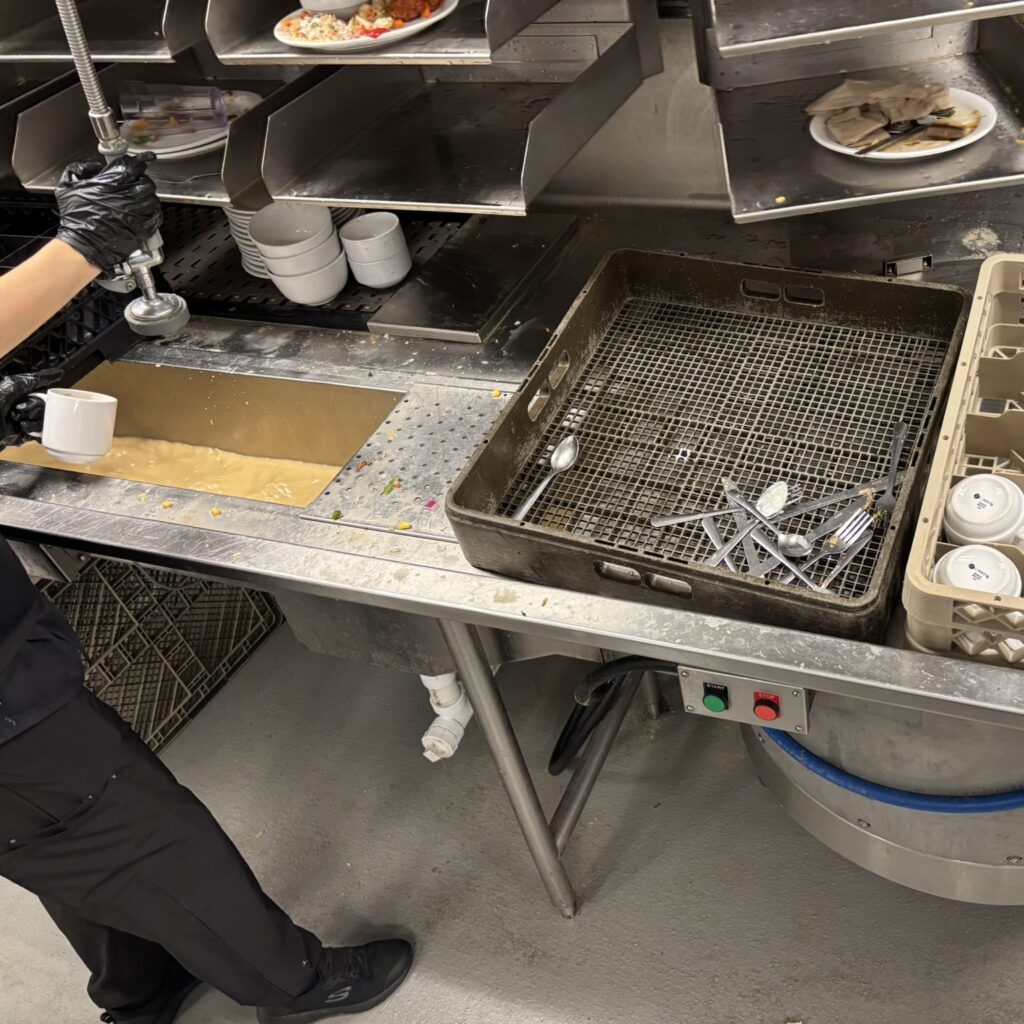
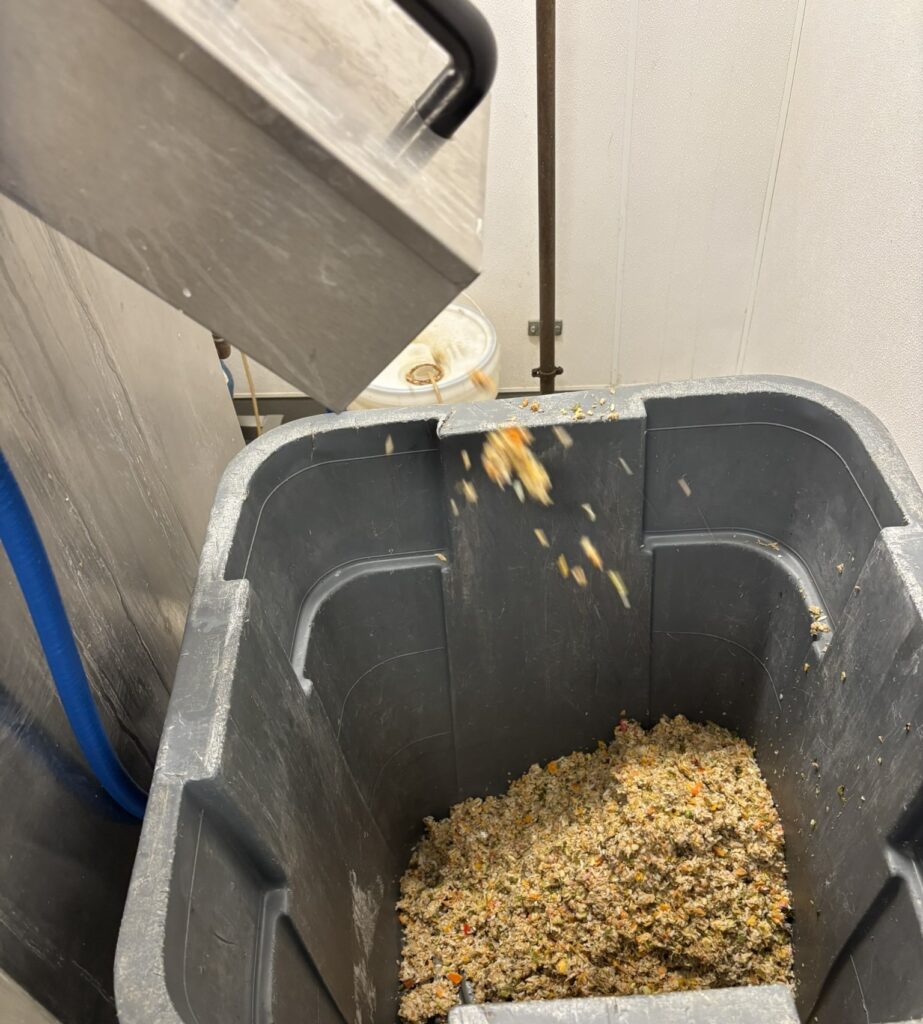
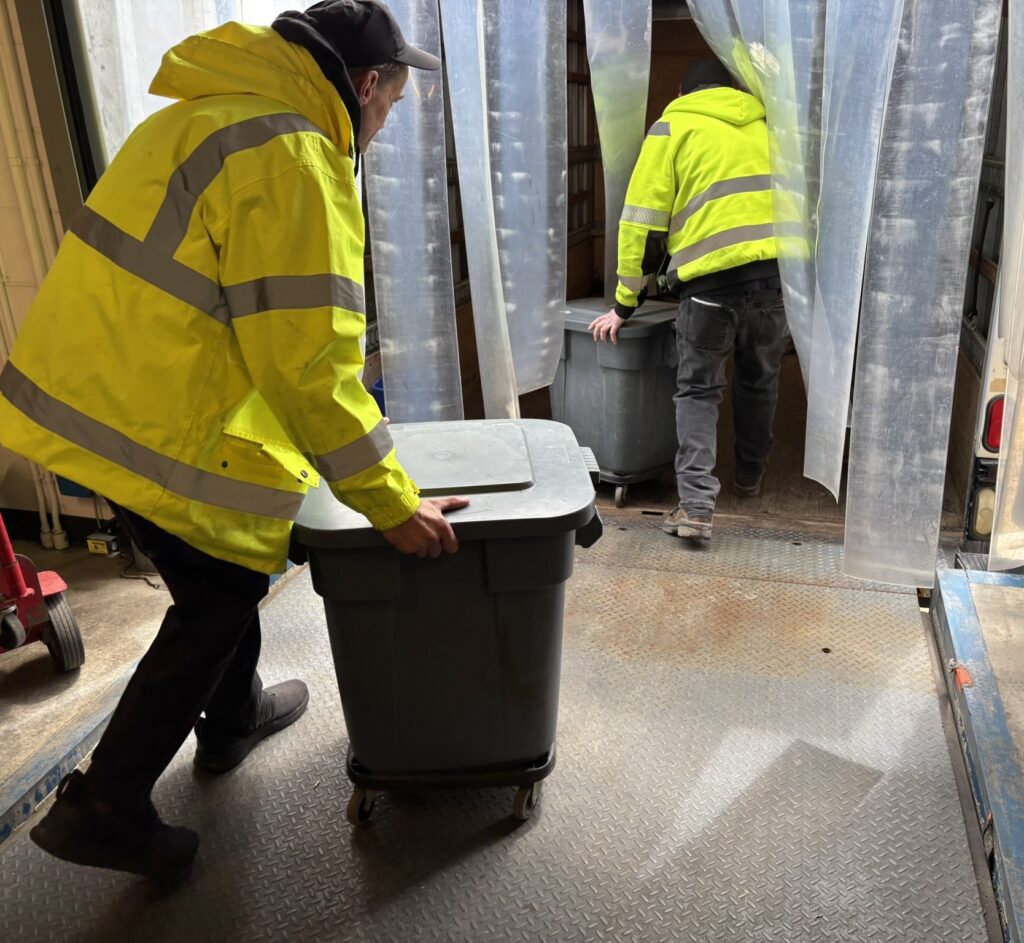
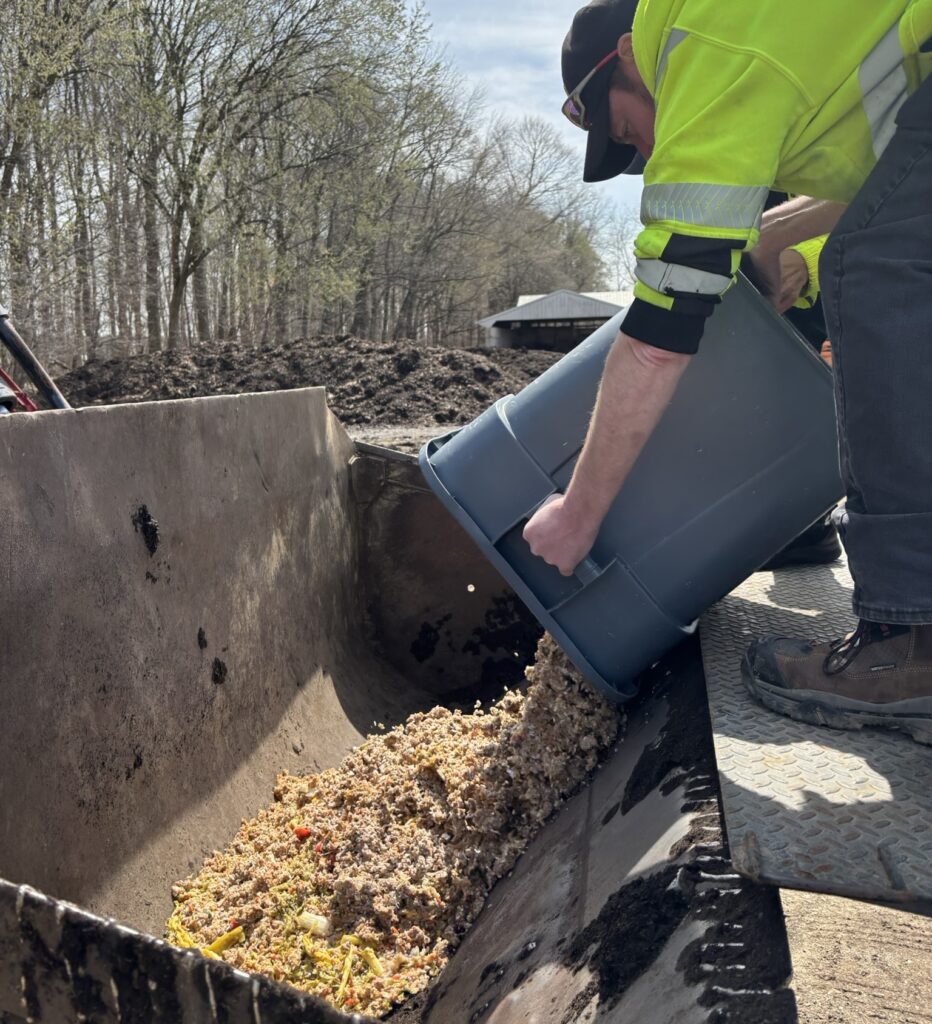
All pre- and post-consumer food waste from the dining hall gets composted on a weekly basis. Creative Dining collects and delivers the pulped food waste to Paradise Composting, a commercial scale composting facility just outside Wooster. This both reduces the amount of waste going to the landfill and reduces our greenhouse gas emissions. Below are some photos describing how the process works. [Left to right]: Food waste gets rinsed of plates into a grinder/pulper; Pulp is collected in large, rollable tubs; Tubs are loaded once a week onto a truck; Truck delivers the food waste to Paradise Composting.
Cafe coffee composting
Starting in 2025, the Sustainability Office has been collecting coffee grounds from the campus cafes for composting in the learning garden. The program is run by the sustainability interns and operates whenever the cafes are open.
Dorm composting
Brand new in January 2026, students can now collect compostable food scraps in their dorms! The Sustainability Office loans out stainless steel compost buckets for interested students. The students must first pass a quiz (to make sure they understand the composting guidelines), then put down a $20 refundable deposit, which they will receive back after returning the bucket at the end of the year. Dorm compost should be dumped in the compost bins at the campus learning garden on Pine St. Please, only plant-based products–not meat, dairy, or oils. To get started with your own dorm compost bucket, take the quiz found here.
Leaf collection composting
Our campus grounds crew diligently collects the many leaves that fall from our beautiful trees during the autumn months in order to help preserve the aesthetic on campus. But don’t worry! All these leaves–combined with the chipped wood from downed limbs throughout the year–are composted on campus, providing close to 100% of our mulching needs each year. This not only saves the college money, but helps promote tree health and a circular economy loop.