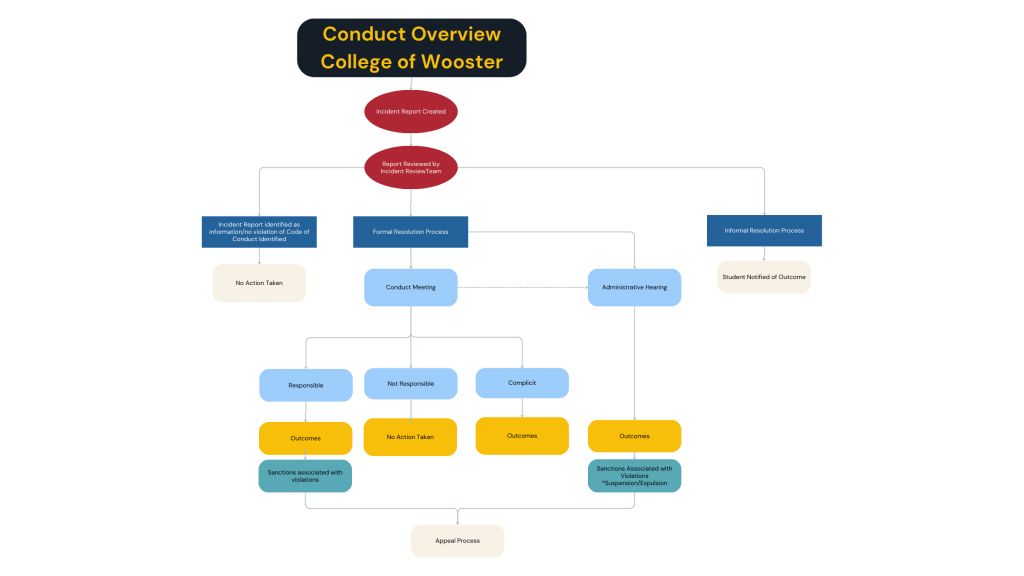
The Process Timeline
Student Conduct Process: What to Expect
When a situation is reported, the College works to review and resolve it as quickly and fairly as possible (most cases are completed within about 10 days). The College of Wooster is committed to resolving complaints in a timely manner. Depending on the complexities of each individual situation, some timelines may vary.
1. A Report is Submitted
Someone (staff, faculty, or a student) submits a report about a possible policy concern.
2. Initial Review by Incident Review Team
The report is reviewed to determine if any college policy may have been violated.
- If no violation is found, the case is closed with no action.
- If a concern is identified, the case moves forward.
3. Resolution Process
Depending on the situation, your case will follow one of two paths:
Informal Resolution
- Used for less serious concerns
- No meeting may be required
- You’ll receive an email with the outcome and any next steps
Formal Resolution
- Used for more serious or repeated concerns
- Includes a meeting to talk through what happened
- A decision will be made based on the information available
- In cases for tier 3 violations (situations where students can be removed from the college), a administrative hearing board may be used for this meeting.
4. Possible Outcomes
After review, one of the following will happen:
- No action (if you are not found responsible)
- Educational or disciplinary outcomes (if you are found responsible or involved)
5. Appeal Option
If your case goes through the formal process, you may have the option to appeal the outcome.
Timing Matters
Most cases are resolved within 10 days, so be sure to check your email and respond promptly if contacted; this helps keep the process moving.
Hearing Types
Administrative Hearings: Held one-on-one with a student conduct officer to determine responsibility.
Learn more about the Administrative Hearing Process (.pdf)
Hearing Panel: Hearing Panels are comprised of a faculty member, staff member, and student representative (in most cases). Panels are typically used for Bias-related cases, Title IX cases, and other high-level cases. Learn more about Hearing Panels (.pdf)
Filing Appeals
Students have the right to appeal the outcome of a student conduct hearing. In some cases where there are multiple parties involved, the responding and complaining party may have the opportunity to appeal the decision. The appeal is not meant to rehear or reargue the same case and is limited to the grounds found in The Scot’s Key. To file an appeal, complete the online form.